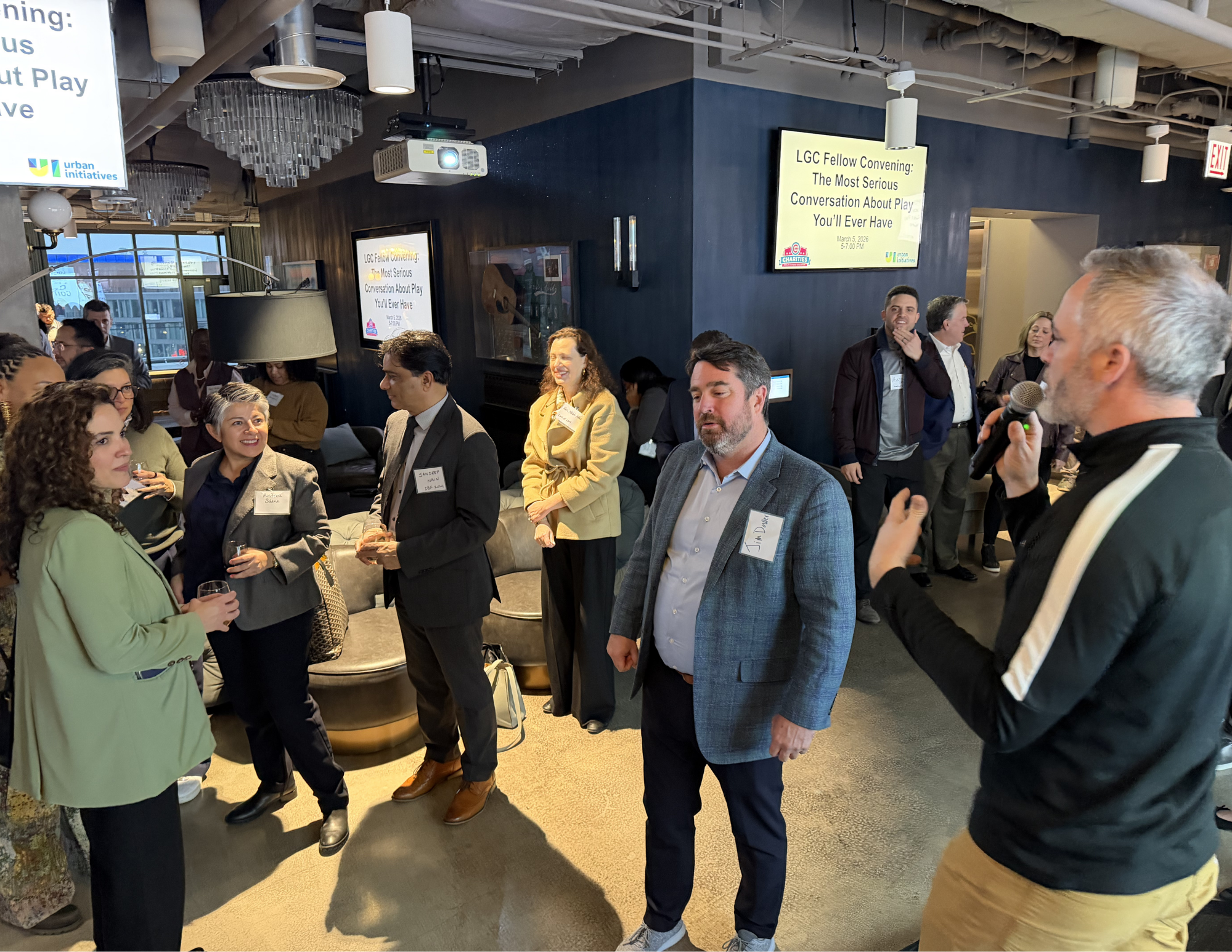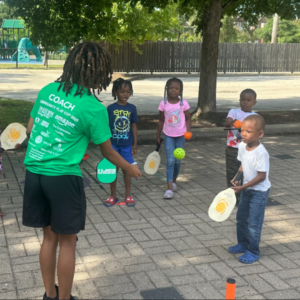

On March 5, leaders from across Chicago gathered at the Cubs Executive Offices next to Wrigley Field for a Leadership Greater Chicago Fellows convening built on one important premise: Play deserves to be taken seriously.
Hosted by LGC Fellows Jim Dower, Jessica Droste Yagan, Mike McGrew, Brooke Skinner Ricketts, and Jesse Ruiz, the evening brought together civic leaders, researchers, practitioners, and athletes to explore a powerful idea: Play builds the human skills cities depend on.
The conversation connected research, lived experience, and civic leadership around a single central question: What happens to a city when young people gain access to play and caring adults?
The Science of Small Wins at Scale
Dr. Eduardo Bustamante, Associate Professor at the University of Illinois Chicago and Director of the UIC Healthy Kids Lab, opened the evening by grounding the discussion in research on youth development and public health.
Young people today are experiencing unprecedented levels of screen exposure while physical activity continues to decline, trends closely tied to rising challenges in youth mental health, social connection, and well-being. Dr. Bustamante emphasized that even modest improvements, when they occur at scale, can produce significant change. He introduced a concept from public health called the Moses Theorem to illustrate why:
“A large impact on a small group is very visible. But a small impact across a very large group can be much more powerful.”
Programs that consistently connect young people to structured play and caring adults can create exactly those kinds of population-level effects, which is why the philosophy matters as much as the program design.
“Use sport to develop the child, not sacrifice the child for the sport.”
Play as Civic Infrastructure
Jesse Ruiz, General Counsel and Chief Compliance Officer at Vistria Group and former Interim CEO of Chicago Public Schools, brought a civic lens to the conversation.
He reflected on a time when youth structures were embedded throughout Chicago’s 77 neighborhoods, structures that reinforced belonging and connection. Over time, many of those structures disappeared. The need for them has not.
“If we treat transit, schools, and parks as infrastructure, we should treat youth development the same way.”
Ruiz spoke from personal experience, having coached youth baseball in his own neighborhood to support his nephew and other local children. The team finished second in the league that first year.
“It didn’t save every kid. But it saved some.”
What mattered most, he said, was the consistency of adult presence.
“Sometimes adults think they’re giving a few hours of their time. But for a child, that time is meaningful.”
Lessons From the Game
Three-time MLB All-Star and Roberto Clemente Award winner Curtis Granderson shared how lessons learned through sports shaped his life and career.
Sports taught accountability early.
“Think about what happened when you showed up late to practice. You learned very quickly how to be accountable.”
They also taught resilience, the kind built through repeated failure and return.
“My high school coach loved baseball because you usually have another game the next day. When something goes wrong, you come back the next day and try again.”
Granderson was candid about how youth sports have changed. Today, participation is increasingly scheduled and expensive, barriers that didn’t exist when he was growing up. But Chicago’s public assets remain extraordinary.
“Chicago has an incredible park system. You can still just walk outside and play.”
He carried that spirit with him throughout his career. When he retired at 39, he had written four words inside his baseball hat: “Don’t think, have fun.”
Why Play Matters
Urban Initiatives CEO Jim Dower reflected on the organization’s growth from serving 12 students in Cabrini-Green in 2003 to reaching more than 100,000 Chicago Public Schools students each year, growth that happened through sustained partnerships and people showing up consistently over time.
He named an important but often overlooked reality: access to play is not evenly distributed.
“Play has become a privilege in many communities.”
Because play is embedded in middle-class environments, its absence often goes unnoticed.
“We test reading and math, so we see those gaps. But we don’t test play.”
Yet the outcomes connected to play, confidence, teamwork, communication, resilience, are exactly what young people need to thrive. And inclusive play environments create belonging for young people who might otherwise feel disconnected from school.
“You can struggle in school, you can get C’s and D’s, and still be part of something meaningful when you’re on a team.”
Skills That Last a Lifetime
Lea Jesse, Executive Director of Cubs Charities, reflected on one of the simplest but most powerful lessons taught in youth programs.
“The very first thing every kid learned was how to walk up to someone, look them in the eye, introduce themselves, and shake their hand.”
Those small moments build confidence, communication skills, and self-belief that travel far beyond any playing field.
“We’re not all going to play professionally, but we can learn a lot from sports that prepares us for life.”
Showing Up
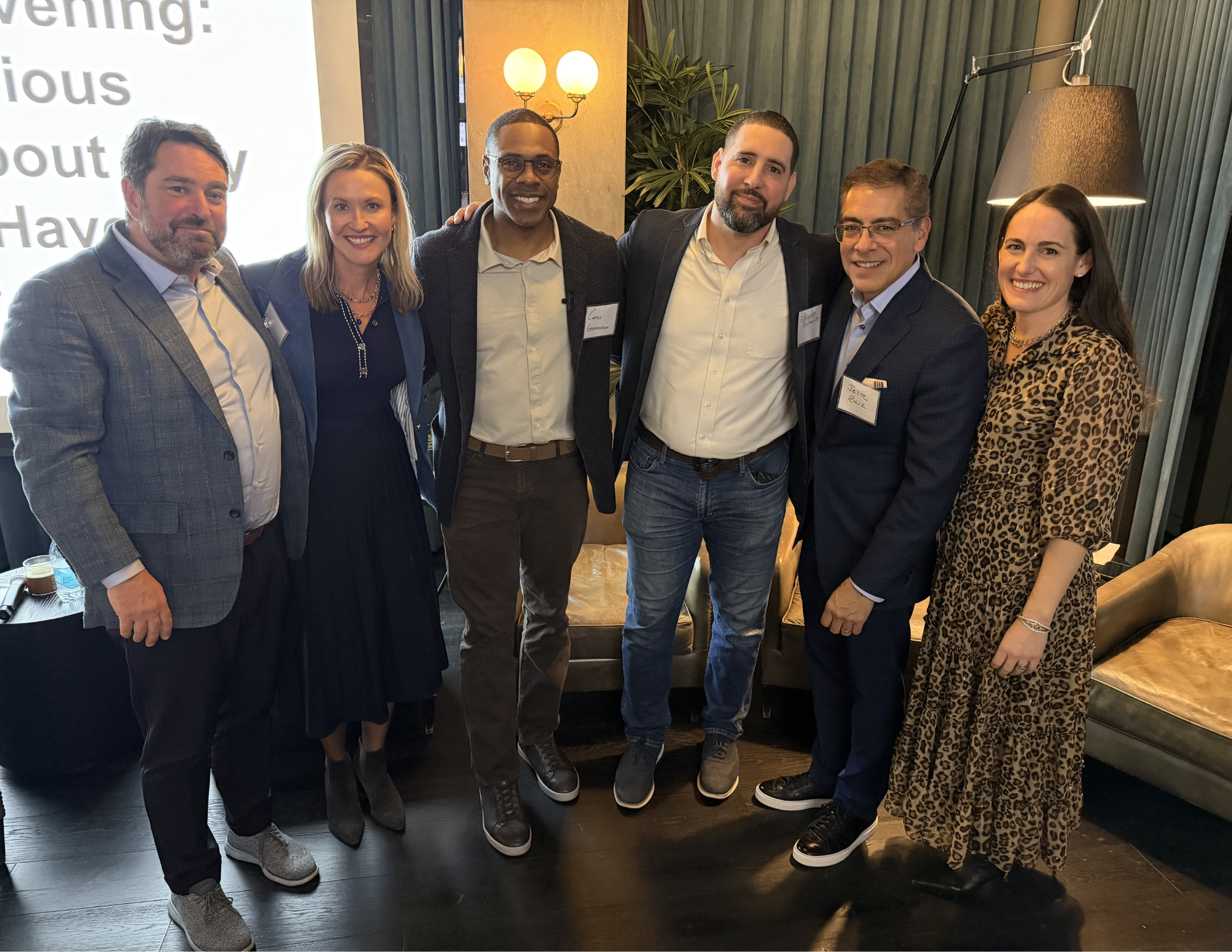
Across research, civic leadership, athletics, and youth development practice, the evening returned to one idea: Young people thrive when adults show up consistently. Those relationships shape how young people see themselves, what they believe is possible, and ultimately, what kind of city Chicago becomes.
Play may look simple from the outside. Its impact is not. It is one of the best investments we can make for Chicago’s young people and our city’s future.
This convening was made possible through the leadership of Leadership Greater Chicago, whose mission to strengthen civic collaboration across sectors closely aligns with Urban Initiatives’ own. We are grateful to the LGC Fellows who hosted the evening: Jim Dower, Jessica Droste Yagan, Mike McGrew, Brooke Skinner Ricketts, and Jesse Ruiz, and to our panelists: Dr. Eduardo Bustamante, Curtis Granderson, Lea Jesse, Jesse Ruiz, and Jim Dower.