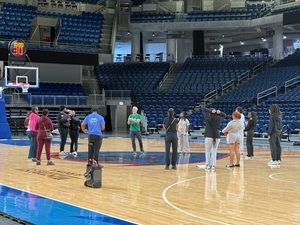
A game day in a crowded Chicago gym is loud. Sneaker soles squeak across the wood, whistles echo toward the ceiling, and the energy moves fast. Then, on one court, two players collide chasing a loose ball. Frustration boils over, voices rise, and within seconds, a hard play escalates to tears.
The play on that court stops. The coach doesn’t yell, and he doesn’t check the scoreboard. He walks over, gets down to eye level, and says four words that change the room: “I know my babies.”
Standing just off the sideline, watching that moment unfold, is an Associate Board member who spent her workweek behind a desk. She hadn’t expected a conflict to be the thing that stayed with her. But days later, she couldn’t get it out of her head.
“At the most recent game day, I saw a conflict between students that escalated to tears,” she shared. “While this is never the outcome we want to see, their coach said something that I haven’t been able to get out of my head.
He said ‘I know my babies’ and adeptly handled the situation while reinforcing the SEL skills in both students to self-manage those big feelings and keep moving forward. I am endlessly impressed with the resources UI provides to teach these critical skills in students of all ages, and I am inspired by the indispensable trust coaches build with their students to sustain their success.”
That trust is the invisible engine of youth development. Sports provide the ball, the lines, and the rules. But it takes a caring adult to create the emotional safety net where a child can feel big feelings, learn to breathe through them, and step back into the game without shame.
Across Chicago, that safety net is held together by people who choose to show up.
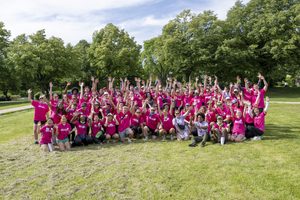
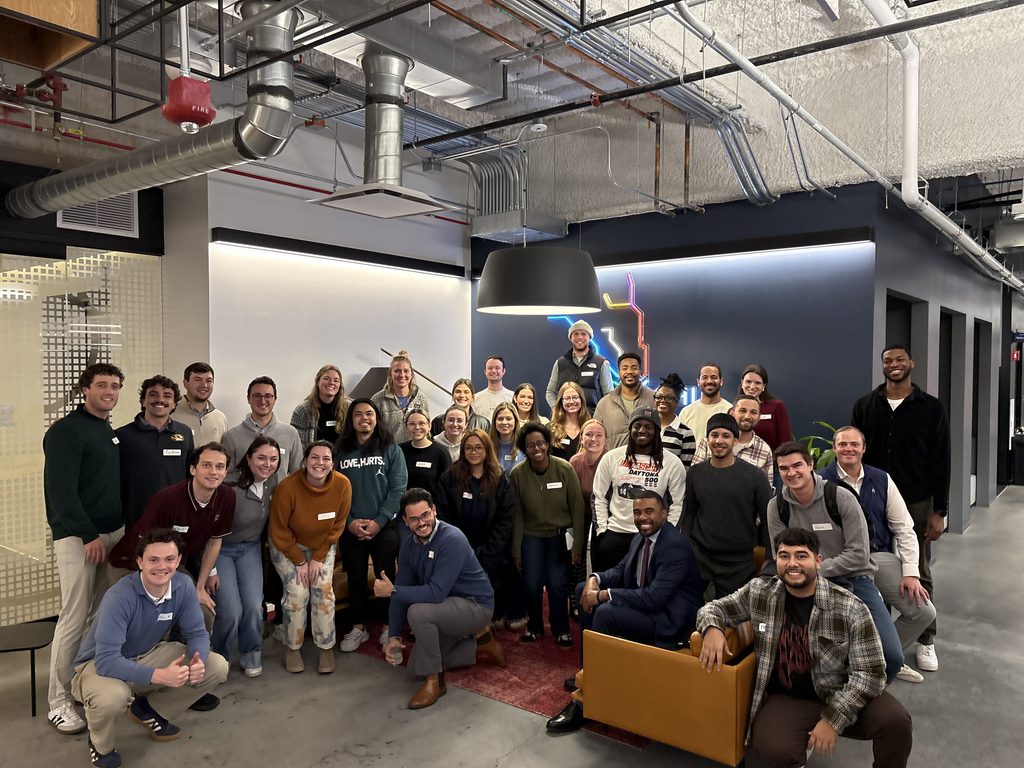
Urban Initiatives’ Associate Board is a community of 120 young professionals who do just that. Every year, they raise over $300,000 to keep play-based social emotional programs and caring coaches accessible for young people. They log hundreds of volunteer hours supporting administrative work, refereeing scrimmages, and loading the water jugs.
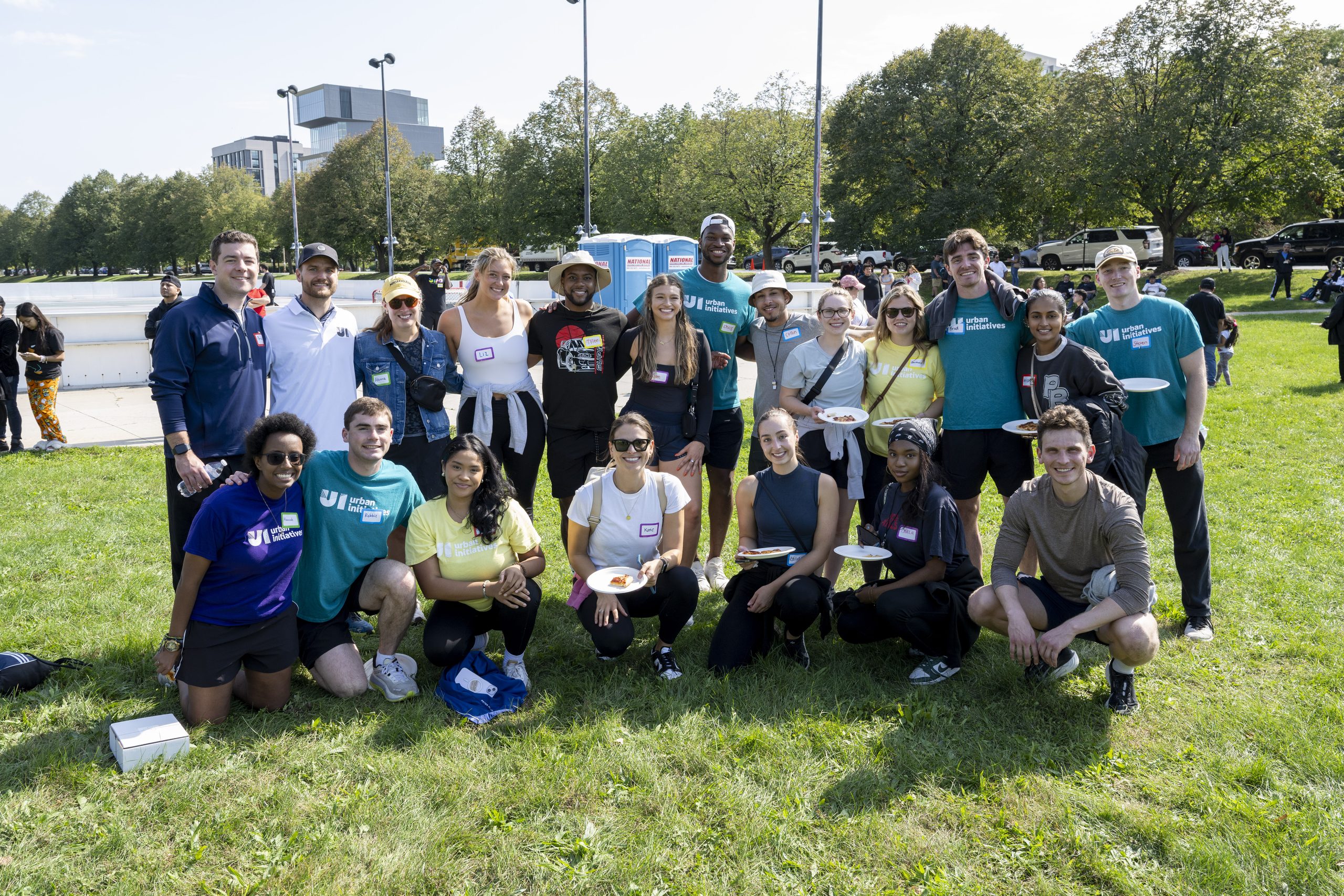
Along the way, they invite colleagues, friends, and neighbors to come see what happens when a city invests in its kids.
Most of them join because they remember what sports gave them growing up: teamwork, discipline, and the feeling of having people in their corner. But once they step into the gym, something else takes root.
As Associate Board member Kim reflected: “When I joined the UIAB, I was driven by a passion for youth involvement in sports and a hope that I could make a positive impact in my free time.
What I didn’t anticipate was the incredible community I’d become a part of – and the chance to meet some of the most inspiring and genuine people”
That sense of belonging works both ways. When adults come together with intention, the community they build around themselves becomes the exact support system that young people need to grow.
Associate Board member Ashley put it simply: “Urban Initiatives is special because it brings people together around something bigger than themselves. I’m passionate about UI because the organization proves that sports can be so much more than a game, it’s about connection, confidence, opportunity, and community. I’m proud to contribute to an organization where showing up, getting involved, and building relationships can make a real impact.”
That impact is not a one-time event. It is a long, steady investment that moves from season to season, neighborhood to neighborhood, and generation to generation. A child who learns to manage their feelings on the court becomes a teenager who leads their peers, and eventually an adult who returns to stand on the sideline for someone else.
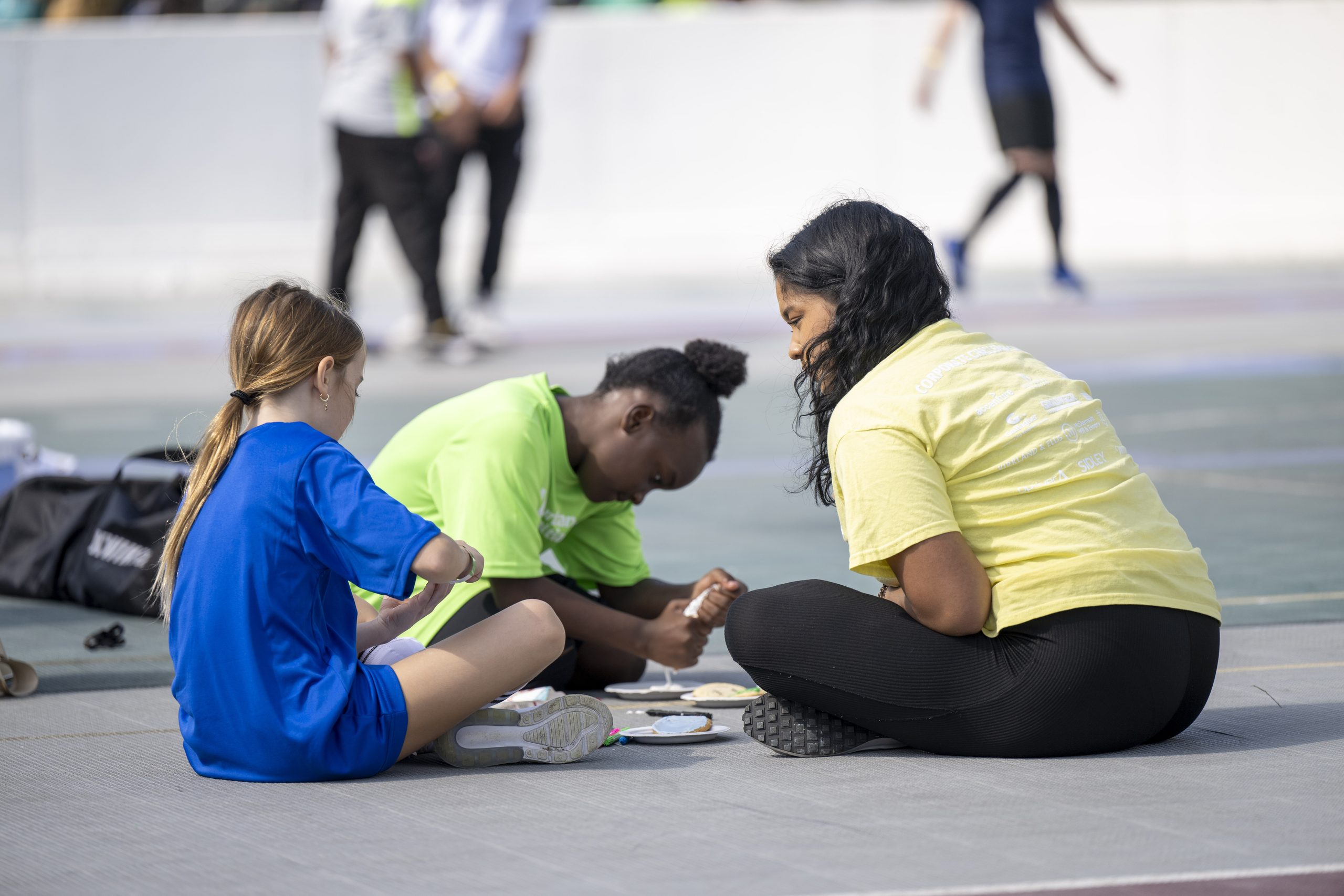
As Volunteer Committee Co-Chair Sam observed: “The cyclical process of participating when you are younger, transitioning into a student coach, and then coming back to UI later in life as a mentor really speaks volumes to how this organization is generationally changing communities.”
Play opens the door. But it is the adults standing beside that door – listening, encouraging, and refusing to look away when things get tough – who make sure every kid knows they belong.