A new framework validated by Chapin Hall at the University of Chicago affirms what Urban Initiatives has long believed: lasting community change starts with strong relationships. Read the full framework here.
From Youth Engagement to Systems Change
Each Urban Initiatives program strengthens the network around young people by engaging families, schools, and communities, creating ripple effects that extend far beyond individual participants.
Through sport and play, we are building a shared infrastructure for well-being: schools that are more connected, families that are more engaged, and neighborhoods that are safer and stronger.
This is the essence of systems-level work: transforming not only individual outcomes but the conditions that make thriving possible.
At Little Village Academy, Relationships Build Resilience
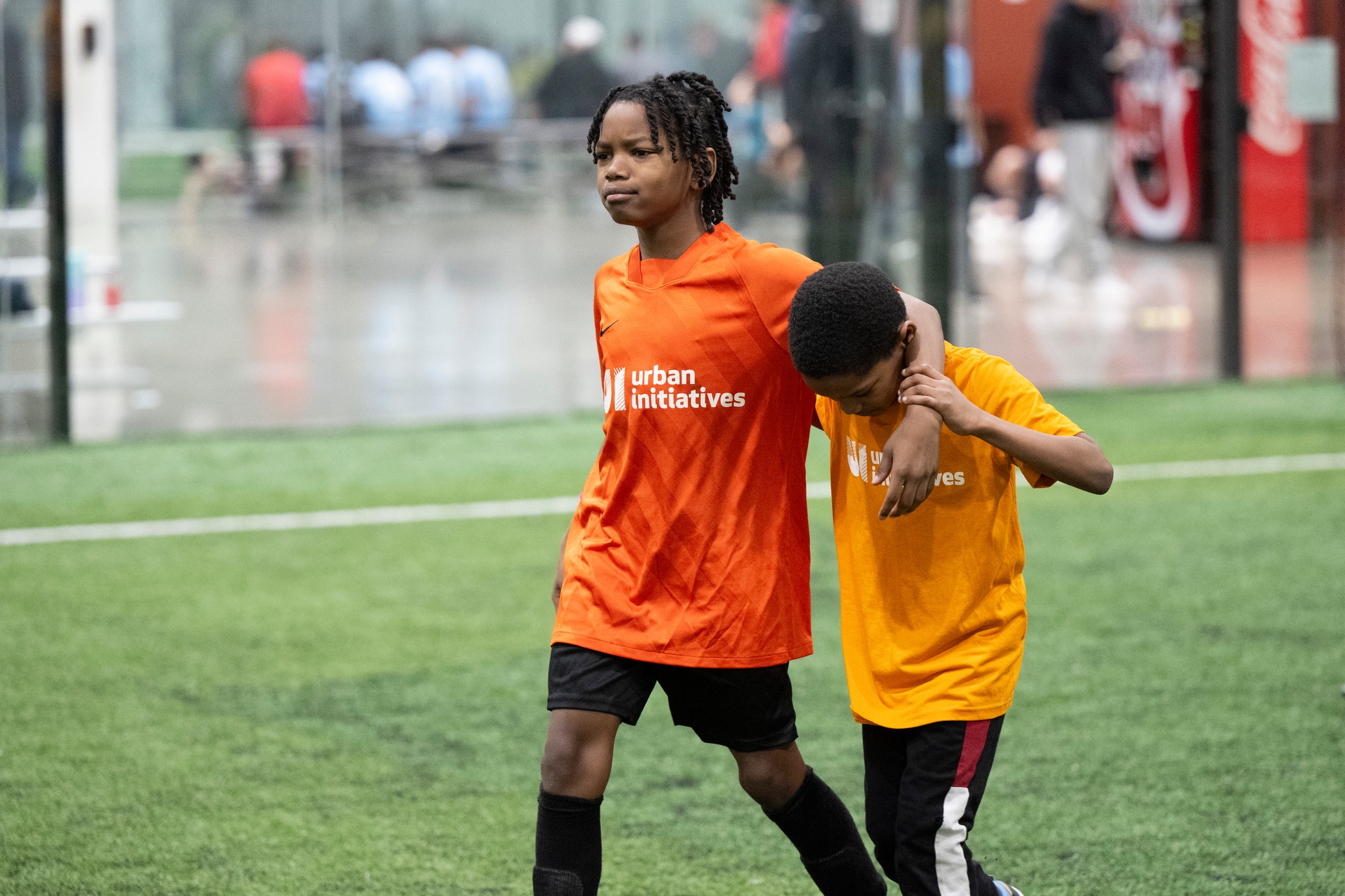
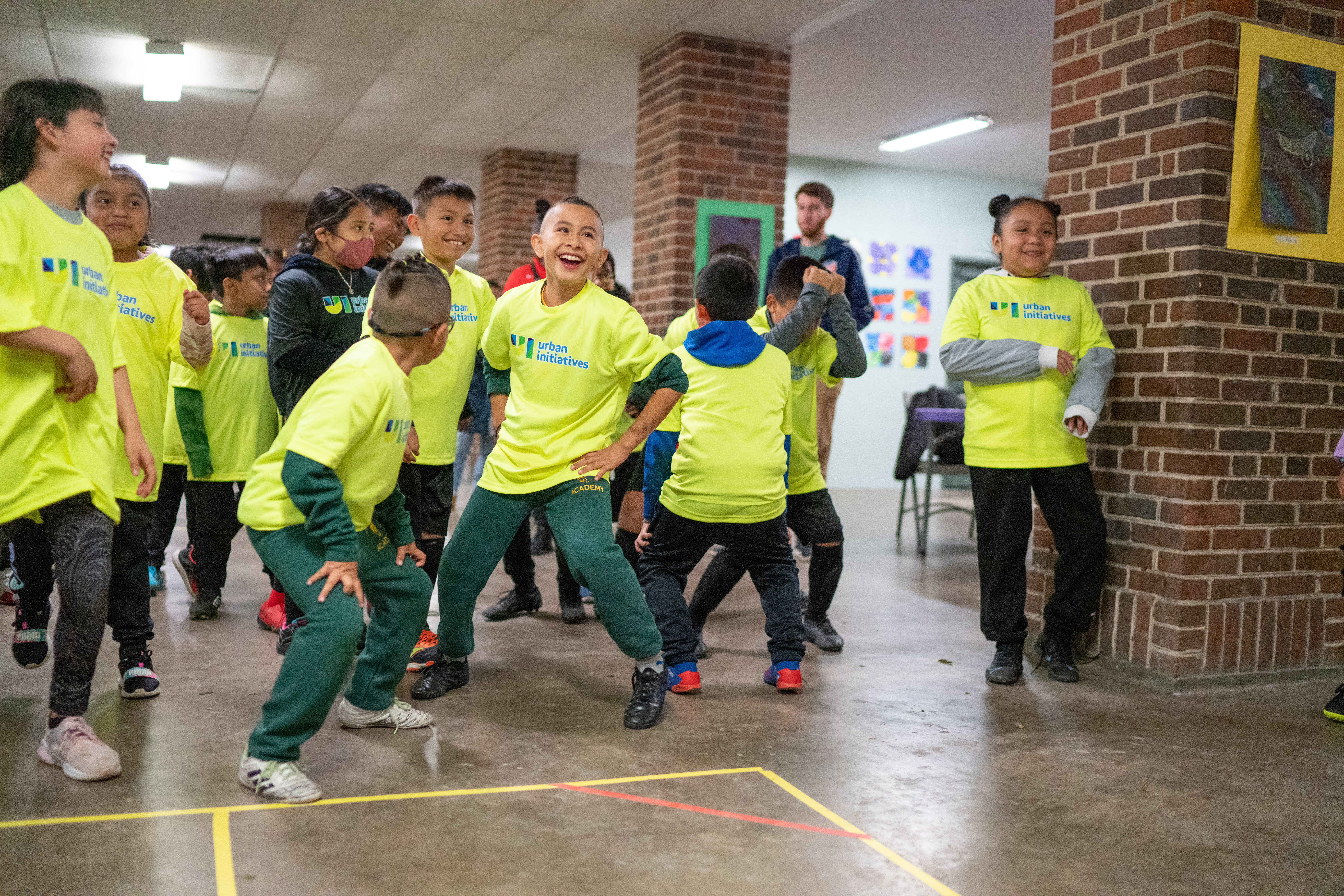
At Little Village Academy in Chicago’s Little Village neighborhood, the sense of community runs deep. “Our school community is tight-knit, and we all care deeply for our students,” said Coach Angelo, who serves as both PE teacher and Head Coach for Urban Initiatives’ soccer program. “Most of us come from Hispanic backgrounds; therefore, we are more engaged and can relate more to our students.”

That shared cultural understanding has helped staff and families stay connected even in challenging times. “Our kids come with heavy burdens, some that I myself have had to carry, but all are free-spirited and wanting to become someone in this world through the so-called ‘American Dream,’” Angelo shared. “As of late, my students have been facing lots of challenges. They really can’t catch a break, but they still persevere.”
Angelo recalled one moment that captures this impact. “One of my soccer players got into a really bad pickle, and no one was able to get through to him and make him understand what he had done,” he said. “They sent him to me, to the gym, where he felt like he belonged and felt safe. We spoke about his actions and the consequences, but most importantly, how we can come to terms with them and accept what he did was wrong, and how we can come up with ways so that this won’t happen again.”
Through Urban Initiatives, Coach Angelo has helped turn sport and play into a bridge for belonging. “Because I am the Head Coach for the soccer team, my principal tends to rely on me with students who have a lot of behavioral issues, because somehow, they always end up playing for me,” he said. “I enjoy this challenge very much, and I know my principal appreciates me at our school, and she also appreciates what Urban does for our students, teaching them SEL skills so that those behavioral and other social-emotional troubles they may have can be solved on their own or with my guidance.”
Stories like these illustrate how a trusted adult can change the course of a student’s day, and sometimes their trajectory. For Angelo, those relationships are the foundation of a thriving school. “Building relationships and common ground with someone helps ease any tensions,” he reflected.
When asked what a thriving community looks like, Angelo didn’t hesitate: “When I picture a community thriving, I picture people connecting, feeling valued, and supported. Some of the qualities that a thriving community has are connectedness, inclusion, collaboration, and, most importantly, enjoyment. Sport is the fuel that is able to get these qualities to shine; it’s what holds it together.”
A National Framework for Community Change
This fall, Chapin Hall at the University of Chicago and Lutheran Services in America released the Community Building and Mobilization Framework, a new, research-based roadmap for strengthening families and communities through collaboration, access, and shared leadership.
The framework identifies five guiding principles that drive lasting community transformation:
People-Driven Collaboration: Centering lived experience and local voice in every solution.
Asset-Based Partnerships: Building on the strengths that already exist within a community.
Capacity Building: Investing in people and systems to ensure lasting, accessible impact.
Shared Leadership: Distributing power and responsibility to foster collective action.
Collaborative Evaluation: Measuring not just outcomes, but trust, relationships, and growth over time.
These principles reflect a growing consensus that transformational change happens when people and institutions work together to prevent crises, build trust, and strengthen local capacity.
How This Aligns With Urban Initiatives’ Approach
For more than twenty years, Urban Initiatives has built its work on one core belief: lasting change begins with trust. Our mission has always been about more than sport. We use play as a catalyst for connection, linking young people, families, and schools into relationships that foster belonging, mutual respect, and shared purpose.
These relationships grow into networks of trust that strengthen neighborhoods and form the foundation for community well-being. The Community Building and Mobilization Framework reinforces this approach, showing that what begins with authentic relationships can evolve into systems-level transformation that improves public safety, health, and economic stability.
When a child builds confidence through teamwork, their family connects to a community of support.
When coaches and teachers work together, schools become stronger anchors for neighborhood well-being.
When families are engaged and connected, communities grow safer, more stable, and more resilient.
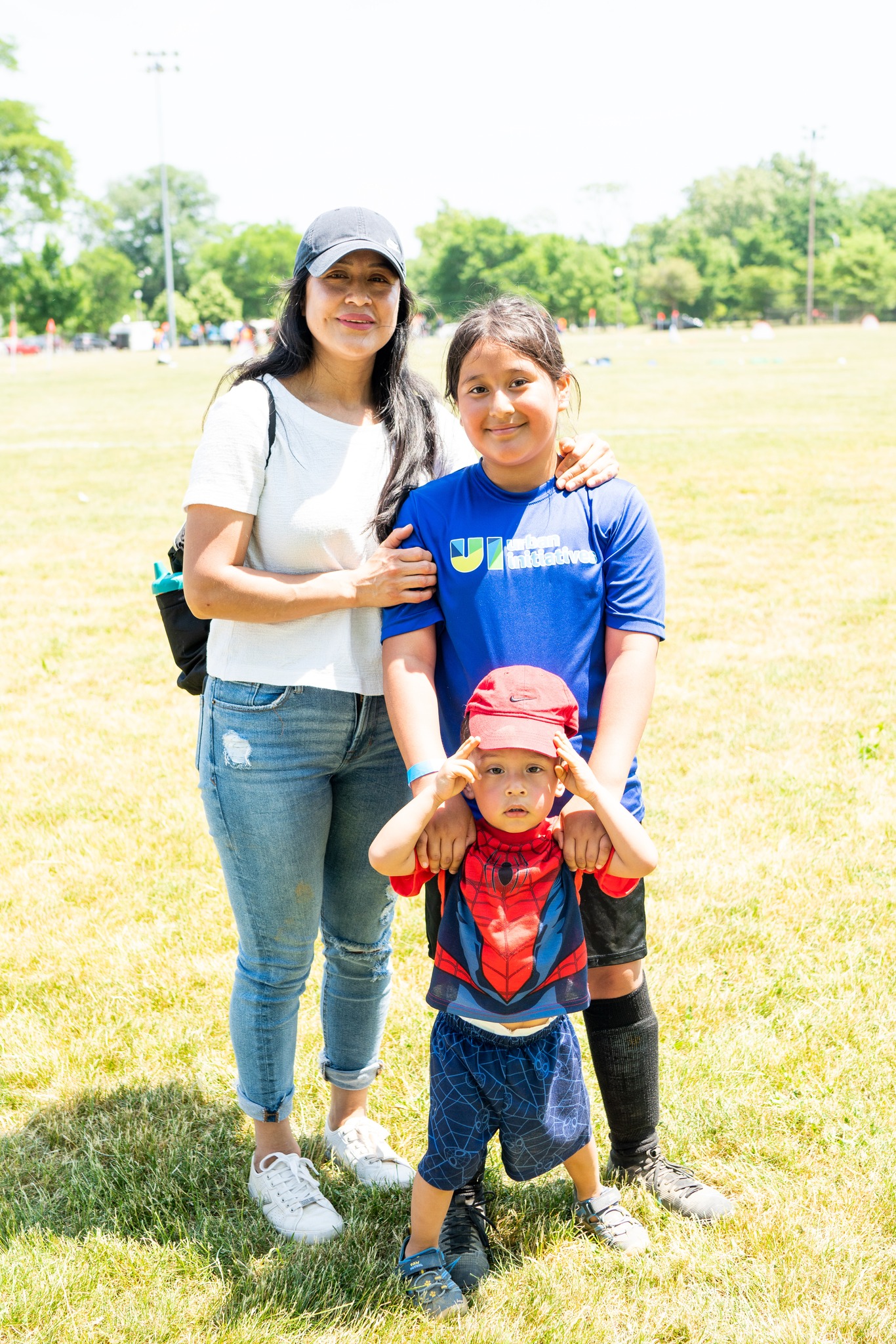
These ripple effects define what systems-level impact looks like in practice. They show how the power of relationships between peers, caring adults, and community partners creates the trust and collaboration that make long-term solutions possible.
Community Building as Prevention
The Chapin Hall framework also reinforces a critical truth: prevention is community work. Families and youth are more likely to thrive when they have access to social capital, caring relationships, and opportunities for connection.
Urban Initiatives’ programs, from Play with Potential to Take the Lead, Coach for Success, and neighborhood-based partnerships, operate with that exact goal. We strengthen community ties so that young people and families have the support systems they need to navigate challenges and build futures of opportunity.
Why It Matters Now
As cities across the country grapple with questions of safety, access, and opportunity, this framework offers both validation and direction. It reminds us that investing in community relationships builds growth, belonging, and collective strength.
Urban Initiatives is proud to see national research affirm what our teams, youth, and partners experience every day: when people play, learn, and grow together, communities thrive.
Urban Initiatives is proud to see national research affirm what our teams, youth, and partners experience every day: when people play, learn, and grow together, communities thrive.